Alter Elbtunnel: The Free Way Under The Elbe
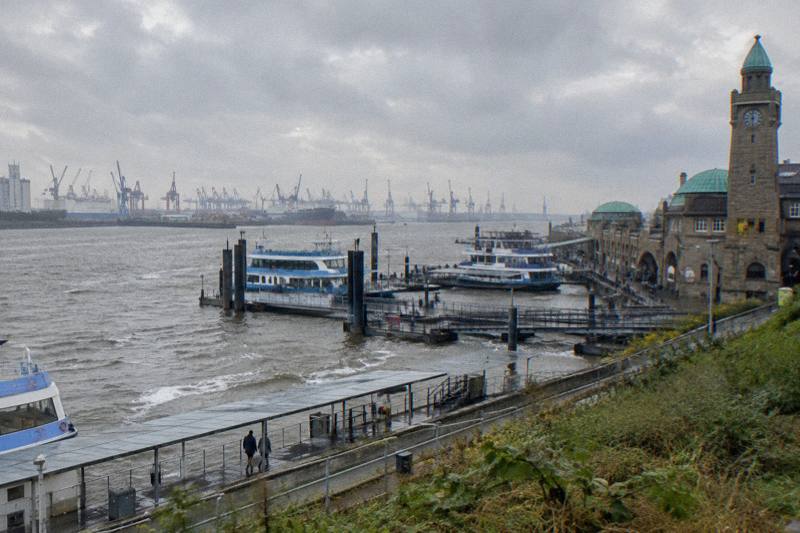
The Alter Elbtunnel is free on foot and by bicycle: walkers and cyclists pass under the river around the clock, and the far side opens onto a view of the harbour skyline.
Short answer
Yes, the Alter Elbtunnel is free for pedestrians and cyclists, open around the clock apart from New Year's Eve between 21:00 and 04:00. The vehicle lifts on both sides have their own operating hours. The tunnel links the Landungsbrücken with the southern bank, and the Elbe views from the south side cost nothing either.
The Alter Elbtunnel has carried people under the Elbe for well over a century, and it still does the job for free. Two tiled tubes sit deep below the river surface, connecting the Landungsbrücken on the north bank with Steinwerder on the south. Walkers and cyclists use it around the clock. It is one of the few genuinely free landmarks left in a city where several former freebies now charge, and the panorama waiting on the southern side may be the best free view of the harbour there is.
The short version: the Alter Elbtunnel is free for pedestrians and cyclists at any hour, every day of the year, apart from New Year's Eve between 21:00 and 04:00. There is no ticket, no gate and no booking. The vehicle lifts that lower cars have their own, limited hours, which matters only if you are bringing more than a bicycle.
This guide, from Free Things To Do In Hamburg, covers what the crossing is actually like, how the lifts work, what the history is, and what the surrounding Elbe front costs, because not everything within sight of the tunnel entrance is free the way the tunnel is.
Is The Alter Elbtunnel Really Free To Use?
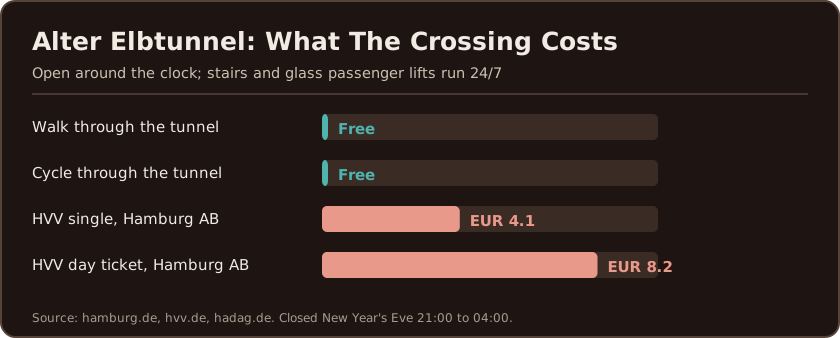
Yes, completely. Crossing on foot or by bicycle costs nothing and needs no ticket, pass or reservation at any hour of the day or night, with one exception: on New Year's Eve the tunnel closes to pedestrians and cyclists between 21:00 and 04:00. The vehicle lifts on both banks are a separate service with their own operating hours, so a driver cannot assume the same around-the-clock access that walkers get.
That free status is unusually solid. Many Hamburg attractions are conditionally free, a museum open free one evening a month, a church nave free while its tower charges, an observation deck that used to be free and now sells tickets. The tunnel has none of those asterisks for anyone on foot or on a bike. You walk in, you ride the pedestrian lift or take the stairs, you cross, and you come back if you want.
To keep the surrounding costs straight, here is what is free and what is not within a short distance of the north entrance at the Landungsbrücken.
| Attraction near the tunnel | Free status | What it costs |
|---|---|---|
| Alter Elbtunnel, on foot or by bicycle | Free, around the clock | Nothing, apart from the New Year's Eve closure |
| Landungsbrücken promenade | Free, open public space | Nothing |
| Elbstrand at Övelgönne | Free, open public space | Nothing |
| HVV harbour ferry, line 62 | Not free | Requires a valid HVV ticket, Hamburg CARD or Deutschlandticket |
| Elbphilharmonie Plaza | Not free | EUR 5 per ticket, EUR 3 reduced, free for children under 3 |
| Speicherstadt district streets | Free, open public space | Nothing |
| Miniatur Wunderland and Speicherstadtmuseum | Not free | Ticketed, prices on their own listings |
The Elbphilharmonie line in that table is worth underlining, because plenty of older guides still describe the Plaza as a free viewpoint. Since the operator introduced a charge, admission to the Plaza carries a EUR 5 fee per ticket, described as a booking fee on the operator's page, with a reduced EUR 3 rate and free entry for children under 3. If you want a free Elbe panorama, the tunnel's south bank and the Landungsbrücken deliver one without a ticket, which we cover further down.
What Is It Like To Walk Through The Tunnel?
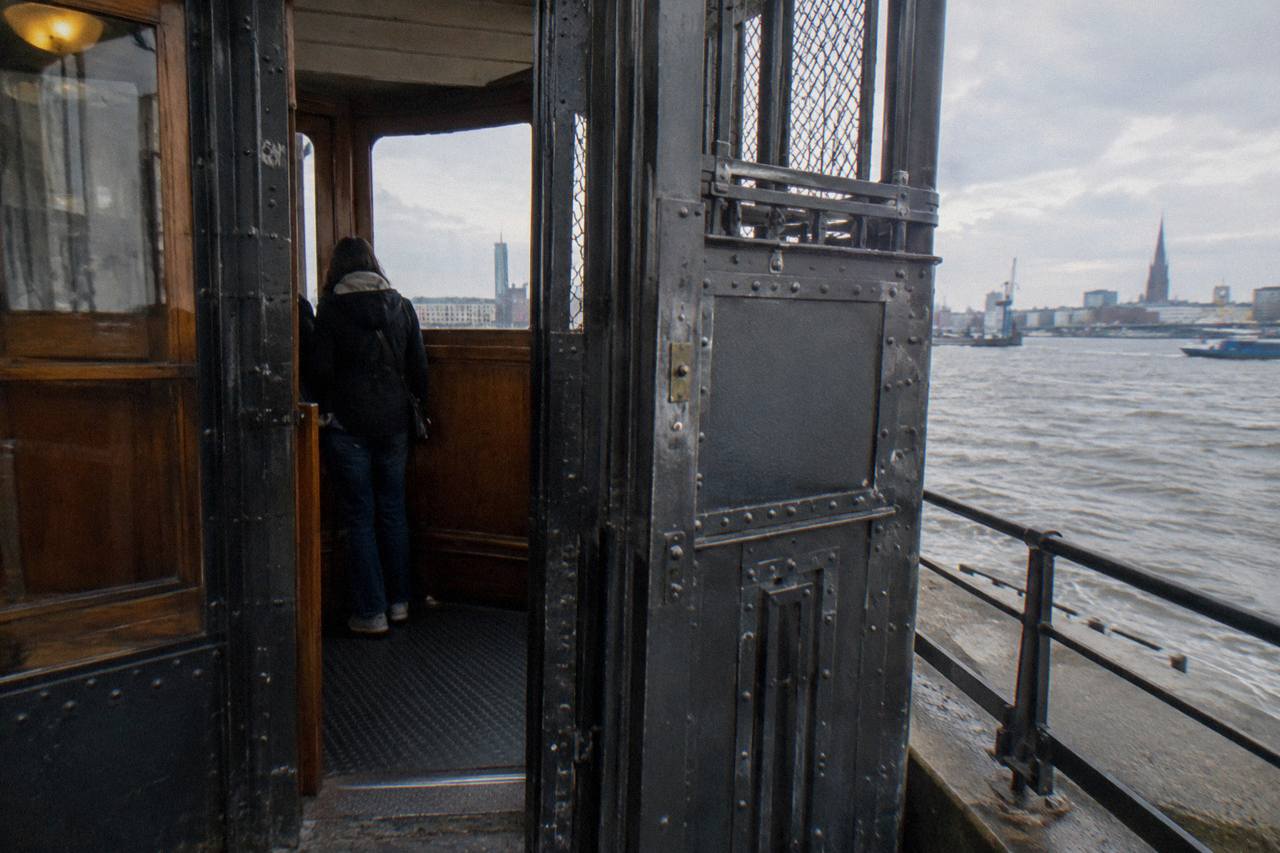
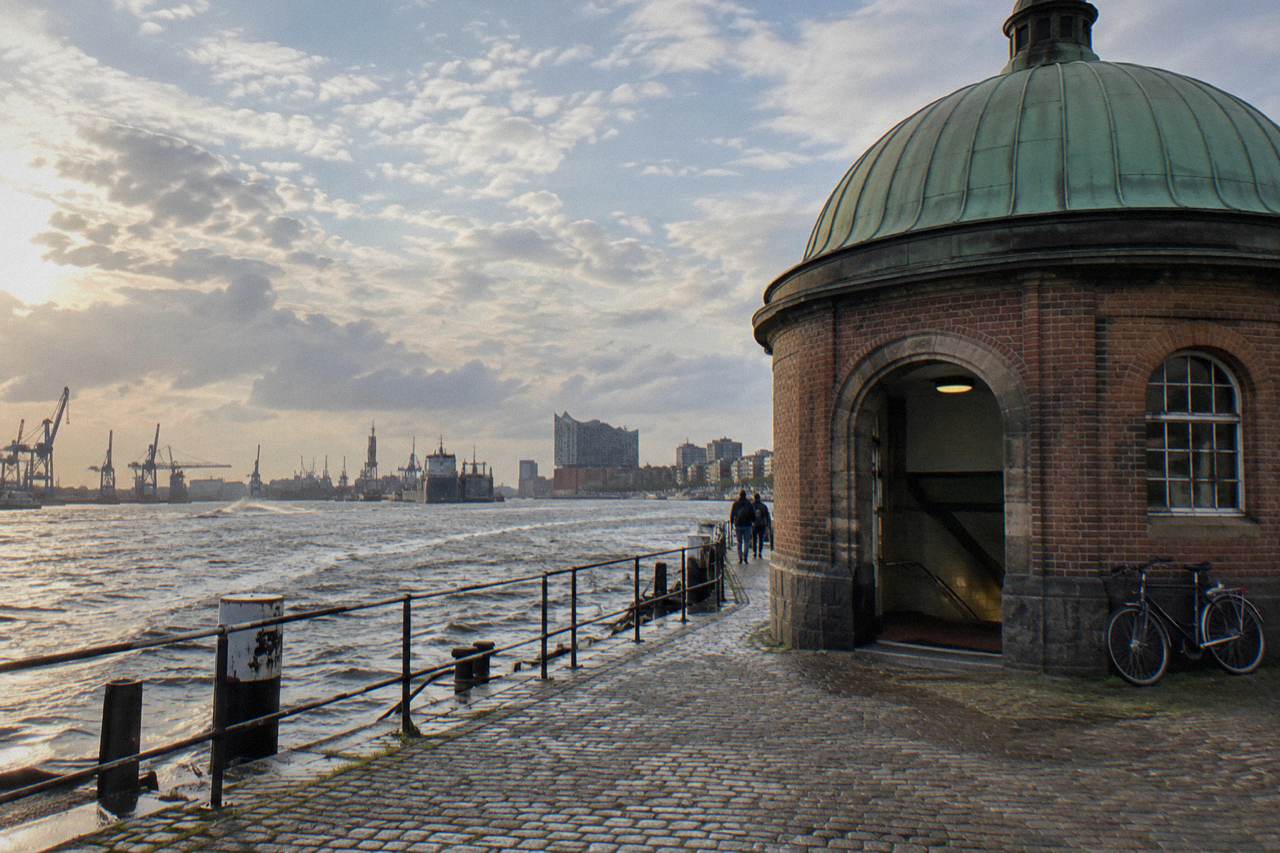
You enter a domed brick building on the Landungsbrücken, take a large historic pedestrian lift or the spiral staircase down to the riverbed level, and walk through one of two long tubes lined with white-and-cream ceramic tiles. The tubes are lit, dry and flat, traffic in the two directions is separated, and the crossing on foot takes only minutes at an unhurried pace. Cyclists share the space.
The lift cages are part of the experience. They are historic machinery of a kind that survives almost nowhere else, wood-panelled and slow in a way that feels intentional, and they hold a surprising number of people per ride. The staircase wraps around the lift shaft if you prefer steps, and plenty of walkers take it down and ride the lift back up just to do both.
Inside the tube, the decoration is the surprise. The walls are clad in glazed tiles, and each section carries a motif relating to the Elbe: fish, crabs, rats, shells and old trading goods rendered in tile, applied decoration from the tunnel's early years that most people walk straight past. The floor is flat and even, the ceiling low enough to feel like infrastructure rather than a metro, and the air noticeably cooler than the street above, which in summer is part of the appeal.
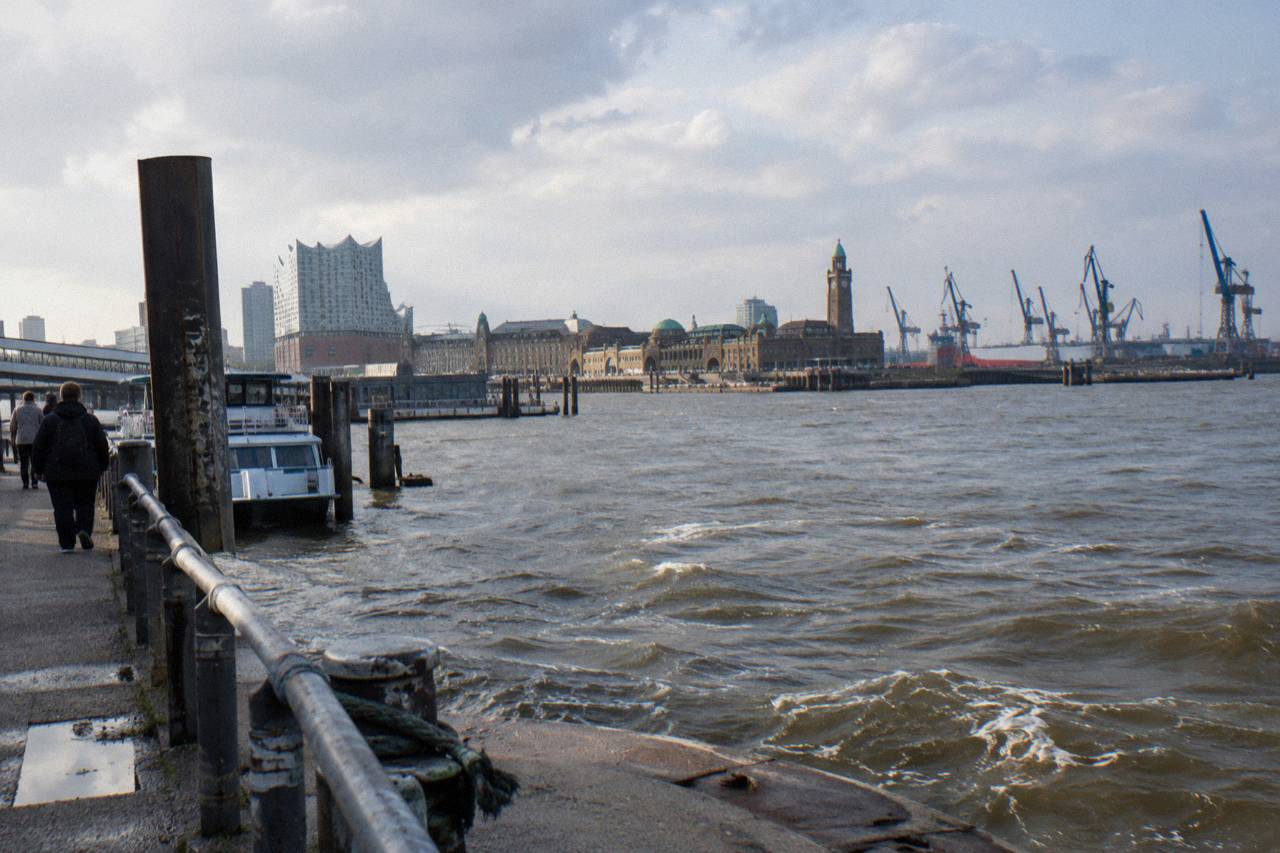
On the south side you surface into Steinwerder, and within a minute of leaving the tunnel building you are standing on the riverbank with the entire north bank skyline in front of you: the Landungsbrücken piers, the church towers of the Neustadt, the cranes of the port to the west and the Elbphilharmonie's glass bulk to the east. No fence, no charge. The spot is the reason many locals send visitors across in the first place, and it anchors our guide to free harbour views at the Landungsbrücken.
How Do The Lifts, Hours And Access Work?
Pedestrians and cyclists can use the tunnel around the clock, every day, except for the New Year's Eve closure between 21:00 and 04:00. The four vehicle lifts, which lower cars and larger loads rather than people travelling on foot, run on a narrower schedule with different hours on weekdays and weekends, so anyone crossing with a vehicle should check the current lift hours before setting out.
For almost everyone reading a free-things guide, the practical answer is simpler: you are on foot or on a bike, and none of the vehicle scheduling applies to you. The pedestrian lift and the stairs serve walkers around the clock, and the crossing is the same at midnight as at midday, though the south bank is an exposed riverbank with no facilities worth planning around.
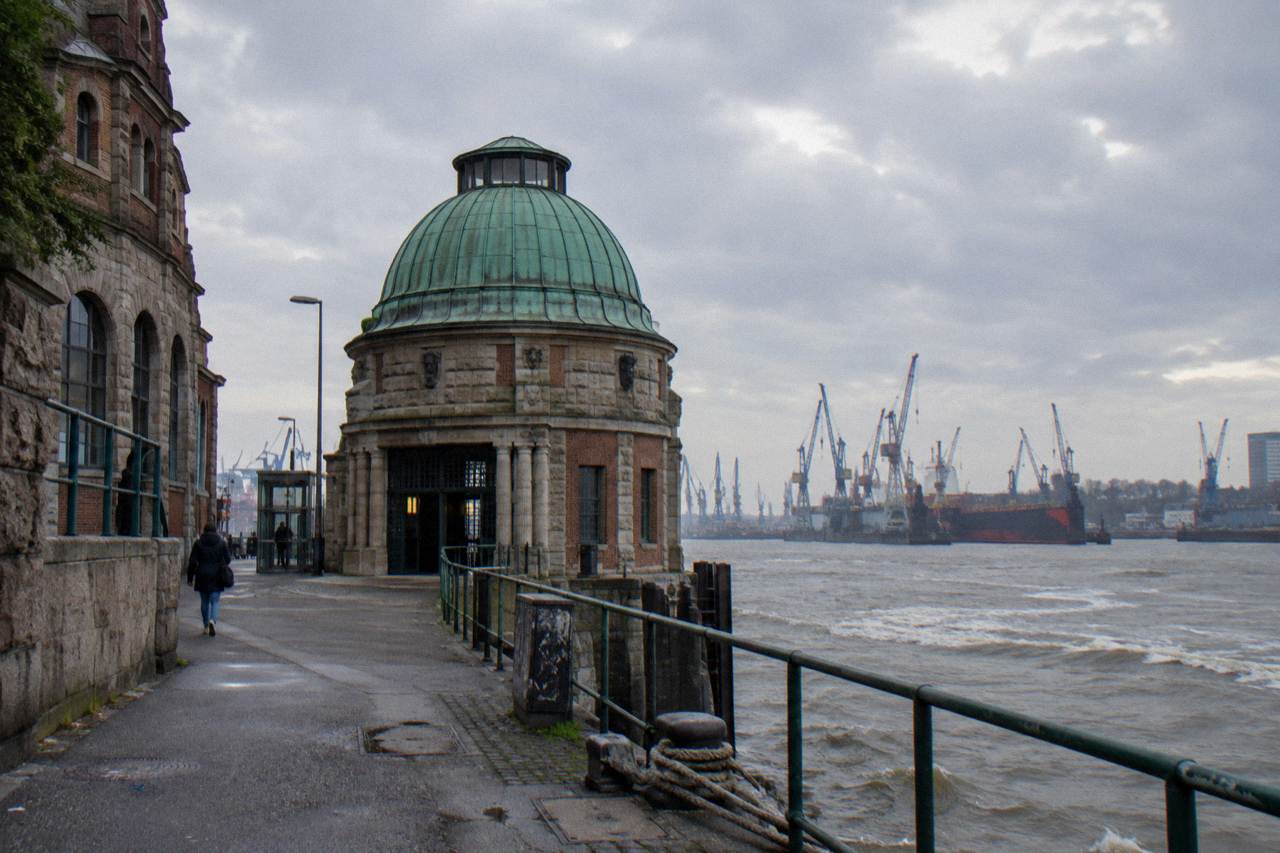
Access is straightforward. On the north side the tunnel building sits directly on the Landungsbrücken, reached in a few minutes on foot from the piers. On the south side the exit opens onto the Steinwerder bank. There is nothing to book and nothing to pay, which distinguishes the tunnel from nearly every other headline sight on this stretch of the Elbe.
The essentials gather neatly into one reference table.
| Access fact | Pedestrians and cyclists | Vehicles |
|---|---|---|
| Entry cost | Free, no ticket needed | Free, but lift service is limited |
| Hours | Around the clock, every day | Own lift hours, weekday and weekend schedules differ |
| Closure | New Year's Eve, 21:00 to 04:00 | Follows the vehicle lift schedule |
| Entry points | Domed brick building on the Landungsbrücken; exit at Steinwerder | Vehicle lift hoists on both banks |
| Booking | None, at any hour | None stated on the operator page |
A crossing also pairs naturally with a guided introduction to the harbour district. The 2-Hour Port, Reeperbahn and Beatles walk by Robin Events & Guides meets at the Landungsbrücken, Bridge 5, the very promenade the tunnel building stands on, runs in German and English for 2 hours, and is rated 4.79 out of 5 across 1,202 GuruWalk reviews. Every walk on this site is free, pay what you want, and reserved through GuruWalk.
Why Was The Tunnel Built And How Old Is It?
The Alter Elbtunnel was built as a crossing for dock workers who lived south of the Elbe and worked in the port on the north side, sparing them the ferry crossing. It was driven through the riverbed using tunnelling methods that were advanced engineering for their day, and its decorative tiled tubes, electric lifts and vehicle hoists made it as much a civic showpiece as a commuter route.
Before the tunnel, the workers of the southern bank depended on boats to reach the shipyards and quays facing them across the water. The city's answer was a pedestrian and vehicle crossing sunk through the riverbed, and the engineering attracted attention when it opened. The two tubes were fitted with the glazed tile decoration already described, and the lift machinery on both banks was built large enough to lower horse-drawn carts and early motor vehicles to the road level.
The tunnel's working life continued as port employment shifted, and it long ago stopped being the main crossing for the port; the modern motor-traffic tunnel and the bridges upstream took that role. What remained was a piece of heritage that still functions, and a full renovation closed the structure for a period before it reopened to walkers and cyclists, as the city's own pages record. Today it is protected as a monument, and its daily users are a mix of commuters on bikes, joggers doing laps under the river and tourists walking over for the view.
If monuments with a trading-history angle appeal, the Speicherstadt across the harbour is the other great free district walk in the city, and guided options exist there too. The UNESCO Warehouses, Cathedrals of Trade walk, in German, by Marius Gebhardt Fotografie & Stadtführungen, meets at Speersort in the Altstadt and runs 2 hours, rated 4.83 out of 5 across 176 GuruWalk reviews.
A related option with the same harbour theme in English is the Walkative Port and Beatles Walk by Walkative! Tours, which meets at the Elbphilharmonie entrance in HafenCity and runs 2 hours 15 minutes in English, rated 4.9 out of 5 across 297 GuruWalk reviews. It is one of the 8 free walking tours this site covers, all on GuruWalk, all free, pay what you want.
What Free Views And Sides Are Around The Tunnel?
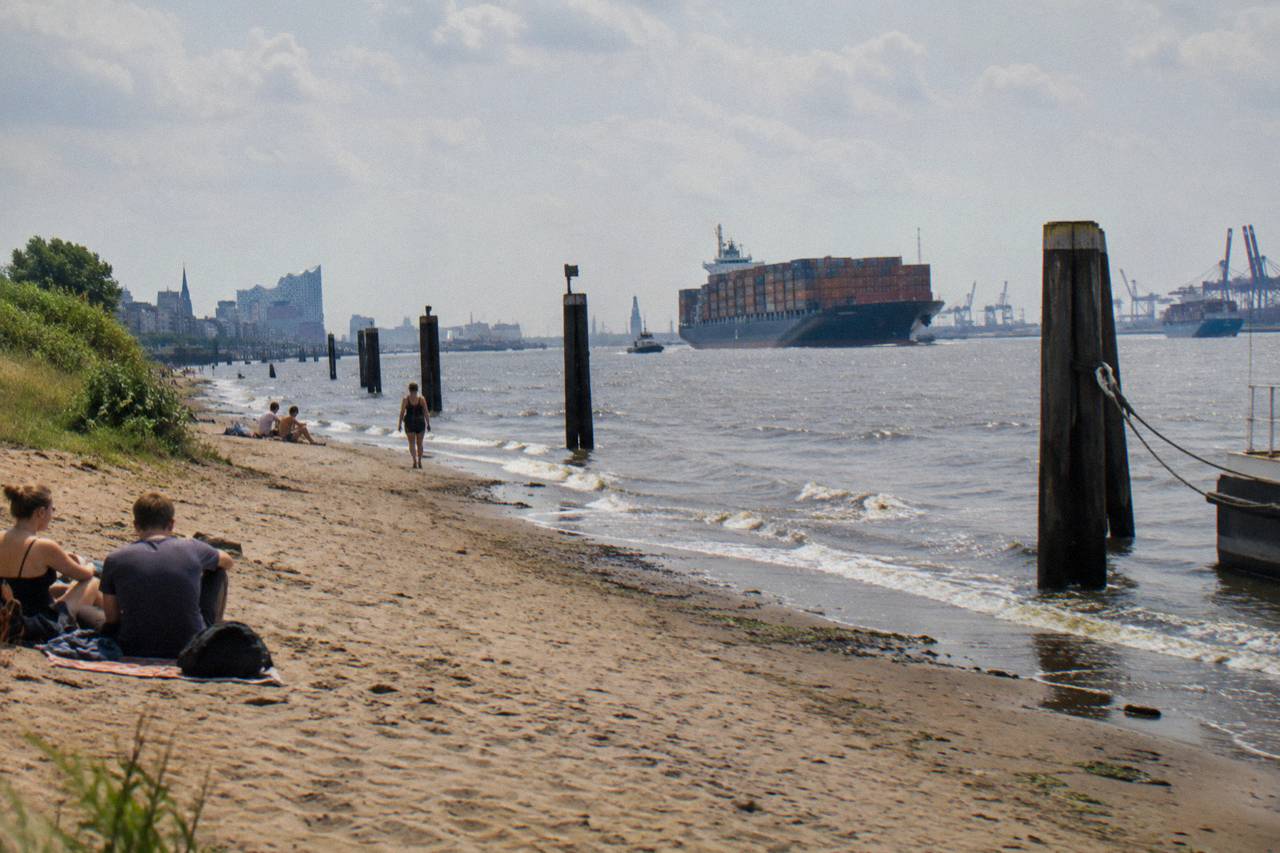
The tunnel gives you two free panoramas for the price of none: the north bank seen from Steinwerder on the south side, and the piers, Elbphilharmonie and port cranes seen from the Landungsbrücken promenade on the north. Both banks, the Elbstrand at Övelgönne and the streets of the Speicherstadt are open public space, free to walk at any hour with no viewing charge anywhere.
Start with the south bank, since you will already be standing on it when you exit. The bank at Steinwerder faces the full width of the harbour front, and because you are standing across the river rather than on it, the composition includes everything at once: piers, church spires, cranes and the concert hall. Photographers value the spot precisely because it is free, always open and unobstructed, a combination the Elbphilharmonie Plaza no longer offers.
Back on the north side, the Landungsbrücken promenade itself is a long free walk past the piers, and from its western end it is a pleasant waterside continuation toward the Elbstrand, the sandy river beach at Övelgönne, which our Elbstrand guide covers in detail. East of the piers the route runs into the Speicherstadt warehouse district, whose streets and bridges cost nothing to wander, though its two big indoor attractions, Miniatur Wunderland and the Speicherstadtmuseum, are ticketed. Our Speicherstadt guide separates the free streets from the paid museums street by street.
One deliberate correction worth repeating: the Elbphilharmonie Plaza is not a free viewpoint any more. The EUR 5 per-ticket charge applies, so treat the tunnel's south bank and the Landungsbrücken as your free skyline, and read our Elbphilharmonie Plaza guide if you are weighing whether the paid deck is worth it for the higher angle. For more on the honest answer to the free question, the city's own page on the tunnel at hamburg.de carries the current details.
Can You Combine The Tunnel With The Harbour Ferry?
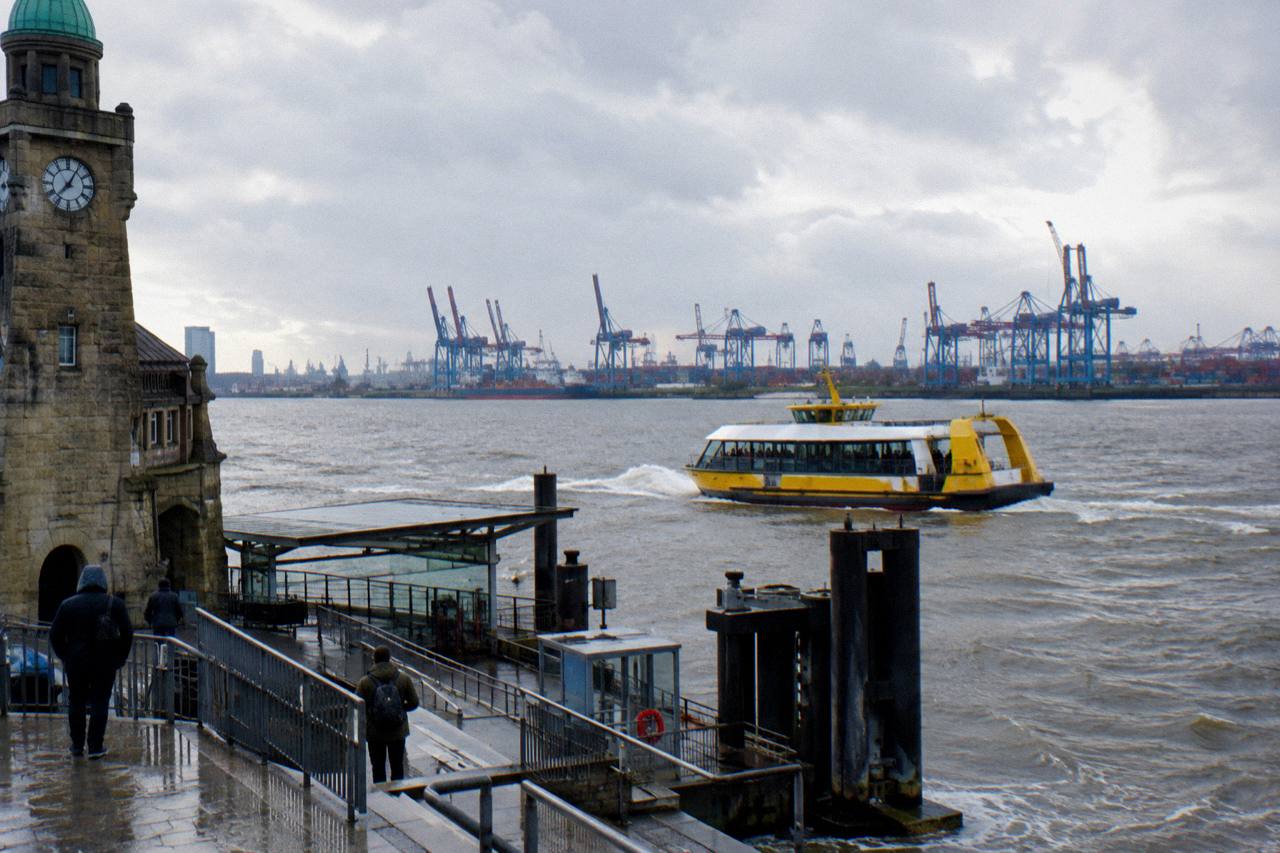
You can, but the ferry is not free, and this is where honest guides part ways with careless ones. The HADAG harbour ferries, including line 62 from the Landungsbrücken, are part of the regular HVV network, so boarding requires a valid HVV ticket, a Hamburg CARD or a Deutschlandticket bought before you step aboard. Walking the tunnel costs nothing, riding the ferry costs a normal transit fare.
The pairing is still one of the best cheap circuits on the Elbe. Cross the tunnel on foot, take in the free south bank panorama, then ride a ferry back across or along the harbour, seeing the port from the water for the price of a transit ticket. What you must not do is board without a ticket on the assumption that harbour ferries are a free cruise, because they are not, and fare inspections on the Elbe routes are ordinary HVV business. Our HVV harbour ferry line 62 guide covers tickets, lines and what the ride actually shows you, and the transit operator's own site at hvv.de has the fares and timetable.
Here is the honest cost picture for a tunnel-and-ferry outing, keeping the free and paid parts firmly separate.
| Part of the outing | Cost | Notes |
|---|---|---|
| Crossing the Alter Elbtunnel on foot or by bicycle | Free | Open around the clock, closed to walkers 21:00 to 04:00 on New Year's Eve only |
| Vehicle lift, if you bring a car | Check current lift hours | A separate service from pedestrian access |
| South bank panorama at Steinwerder | Free | Open riverbank, no viewing charge |
| Landungsbrücken promenade | Free | Open public space |
| HADAG harbour ferry, line 62 or 72 | HVV fare | Requires HVV ticket, Hamburg CARD or Deutschlandticket before boarding |
| Elbphilharmonie Plaza | EUR 5 per ticket | EUR 3 reduced, free for children under 3 |
When Are The Best Conditions For A Crossing?
The tunnel itself is the same in every season and every weather, being underground, dry and lit around the clock, which makes it one of the few Hamburg sights immune to rain. The reason to choose your moment is the south bank panorama, an open riverbank with no shelter, so the crossing is most rewarding when the sky is clear enough to read the skyline across the water.
Because both entrances and the viewing bank are always accessible, timing is genuinely flexible. An evening crossing puts lit piers and harbour floodlighting across the water, a consideration in winter when darkness arrives early. The tunnel imposes no time limits.
For winter visitors the tunnel earns its place on any list. Alongside indoor-at-no-cost options like the first-Thursday museum evenings described in our free museums in Hamburg guide, an underground river crossing followed by a wrapped-up riverbank stop is a dependable free outing when the weather closes in.
What Else Should You Know Before You Go?
Take the tunnel on foot or by bike, expect a short walk each way, and treat the south bank as the destination rather than the tube itself. Bring nothing that needs booking, because nothing here takes one. Pair the crossing with the Landungsbrücken, the Elbstrand or the Speicherstadt streets, all free, and reserve any guided walk separately on GuruWalk, where every walk is free, pay what you want.
A few practical notes finish the picture. The tunnel building on the north side is a landmark in its own right, a domed brick pavilion directly on the promenade, hard to miss from the piers. Cyclists share the tubes with walkers and ride through rather than walk their bikes, so keep to the marked side. The south side is a working port edge with active facilities, so stay on the public bank path rather than exploring fenced areas. And if your plan is a round trip, walking out and back through both tubes, doing one in each direction, is a common way to catch the tile decoration properly.
The wider neighbourhood also rewards a slow pass. West of the tunnel entrance the promenade runs toward Övelgönne and the Elbstrand, and east of it the route passes the piers toward HafenCity and the Speicherstadt. If you want structure and story rather than a self-guided wander, the free GuruWalk walks covering the port and old town fill that role, and the selection below is a fair starting spread.
Common Questions About The Alter Elbtunnel
Is the Alter Elbtunnel free?
Yes. Crossing on foot or by bicycle is free at any hour of the day or night, with one exception: it closes to pedestrians and cyclists on New Year's Eve between 21:00 and 04:00. There is no ticket, gate or booking for walkers and cyclists.
How long does it take to walk through the Alter Elbtunnel?
The walk through the tubes takes only minutes each way at an unhurried pace, plus the lift or staircase ride down and back up. Allow half an hour for the round trip with time on the south bank for the view.
Is the Alter Elbtunnel open at night?
Yes, pedestrians and cyclists can use it around the clock, every day, apart from New Year's Eve between 21:00 and 04:00. The vehicle lifts have their own operating hours, which apply to cars and larger loads rather than people on foot.
Can you take a bike through the Alter Elbtunnel?
Yes, bicycles are carried free in the same tubes as pedestrians, and cyclists ride through rather than walk their bikes. The crossing is part of the everyday bike network linking the Landungsbrücken with the southern bank.
Where does the Alter Elbtunnel come out?
The north entrance is the domed brick building on the Landungsbrücken. The south exit surfaces at Steinwerder, where the public riverbank gives the free panorama across the full harbour front, from the piers to the Elbphilharmonie.
Is the view from the south side really free?
Yes, the Steinwerder bank is open public space with no viewing charge, and unlike the Elbphilharmonie Plaza, which now charges EUR 5 per ticket, the tunnel crossing and the south bank view both cost nothing at any hour.